It’s Not Yourself You Doubt…It’s God

There I am giving myself a pep talk for the hundredth time, “Come on, stop doubting yourself.” Then an epiphany, it’s not myself I doubt, it’s God.

I seem to have often lost sight of God in the confusion of trying to find myself – ironic. What is that even about? I have noticed that it is hard to know yourself when you don’t trust yourself to do anything without making a mistake or outright failing. What I know, then becomes covered by failings and regrets. So, I don’t trust myselves to do the simple things, for I see potential failure in every action. But there is something even more sinister at play. When I doubt myself it’s because I am using myself as a scapegoat. Yes, that was the true epiphany, behind the self-disgust and self-criticism is the sad truth, I don’t trust God to fulfil His promises to me.

What are the Promises of God?

God has promised to strengthen us when we are weak. However, many people become weak because they forget this promise or don’t believe it. It can seem impossible to believe in the middle of a challenging situation. God has also promised to take care of all our needs. Yet, we often doubt how we will receive the things we need and how we can accomplish certain tasks. We forget that God has already promised to take care of our needs. When we fail to get what we need, we blame ourselves for not being enough, not being smart enough, or not being resourceful enough. However, we fail to acknowledge that we have totally ignored the promise from God to take care of all our needs. Then we pray for God to help us and then turn to unqualified, ill-equiped persons just like ourselves forgetting that we have to wait. We do not wait for an answer but proceed to answer our own prayer to God in a timeline that suits our desires and not the desires of God. God promises to work everything out for our good, yet we get disappointed when we don’t get the job, or end up where we don’t want to be. We feel that there was something we could have done to make things happen in the way we think they should happen. We are not thankful for the rejections, for the nos and for the delays. Really we get mad at ourselves for not being enough. The sad truth is we don’t trust God to know what is best and just leave it all to Him. He promises to be with us and to protect us but we never remember this when we feel alone, we wonder what’s wrong with us, why we have no friends and we try to mould ourselves into people pleasers to keep those who were never meant to stay with us around. We are not confident that God can take care of us, so we worry about everything and everyone and never venture beyond what we can see and understand. Then there is the promise of freedom from sin. Here we feel our sins can never be forgiven no matter what because they are so bad, so unforgivable, even though God already promises through His words, “Most assuredly, I say to you, whoever commits sin is a slave of sin. And a slave does not abide in the house forever, but a son abides forever. Therefore if the Son makes you free, you shall be free indeed (John 8: 34-36). We are keeping ourselves shackled to our sins by not believing that we are free of them through Jesus Christ. And because of these doubts, we lack the peace that comes from God. We cannot find it in exercise, yoga, motivational quotes or daily affirmations but in the word of God, “But the Comforter, which is the Holy Ghost, whom the Father will send in my name, he shall teach you all things, and bring all things to your remembrance, whatsoever I have said unto you. Peace I leave with you, my peace I give unto you: not as the world giveth, give I unto you. Let not your heart be troubled, neither let it be afraid” (John 14:26–27).

Now, the safest way to combat your doubts is to live in the word of God. I have been guilty of skimming and not living in God’s word to my detriment. It can seem hard to daily turn to the word of God for sustenance and the enrichment of our faith, but it is vital for survival. We are too busy, but are we making the effort to find the time. As for me, I know I am not and that is not a good place to be. It is vital to the survival of our relationship with God and victory over the challenges that rush at us on a daily basis. Also, we have to strengthen our prayer life and be consistent in all things, whether we see them as major or not. When our communication and connection with God is undermined then doubts creep in and take hold because we have lost sight of the one who truly sustains us. We have to nurture our relationship with God so that our faith grows. We have to practice letting go and letting God no matter the outcome. We have to trust, that His ways are always better than our way. We have to trust that He will make a way in the wilderness and rivers in the desert for us. Not because we deserve it or because we have earned this great and wonderful gift, but because He is faithful and does not give us what we deserve but what we require.

One Constant

There is one constant,
God does not change.
He keeps His promises
This does not change.

He is the light
that challenges the dark tide,
washes away faithlessness
with unmatched love.
Death and destruction are never satisfied.

He is all that is at the very essence of Satisfaction

Where Do I Begin?

Where Do I Begin?

I am in ruin,
where do I begin?

Nothing is true
not even you
for you
are conditional
surealism view
lies 
to fool a few
who knew
better
but were fools
to dreams
youths 
who flew
in a cage
crafted with glue
that monsters could undo
with
addictive 
compulsive
untruths.

The Road of the Dread by Lorna Goodison, A Metaphor for Life

The Road of the Dread

That dey road no pave
like any other black-face road
it no have no definite color
and it fence two side
with live barbwire.

And no look fi no milepost
fi measure yu walking
and no tek no stone as
dead or familiar

for sometime you pass a ting
you know as . . . call it stone again
and is a snake ready fi squeeze yu
kill yu
or is a dead man tek him
possessions tease yu.
Then the place dem yu feel
is resting place because time
before that yu welcome like rain,
go dey again?
bad dawg, bad face tun fi drive yu underground
wey yu no have no light fi walk
and yu find sey that many yu meet who sey
them understand
is only from dem mout dem talk.
One good ting though, that same treatment
mek yu walk untold distance
for to continue yu have fe walk far
away from the wicked.

Pan dis same road ya sista
sometime yu drink yu salt sweat fi water
for yu sure sey at least dat no pisen,
and bread? yu picture it and chew it accordingly
and some time yu surprise fi know how dat full
man belly.

Some day no have no definite color
no beginning and no ending, it just name day
or night as how yu feel fi call it.

Den why I tread it brother?
well mek I tell yu bout the day dem
when the father send some little bird
that swallow flute fi trill me
and when him instruct the sun fi smile pan me first.
And the sky calm like sea when it sleep
and a breeze like a laugh follow mi.
Or the man find a stream that pure like baby mind
and the water ease down yu throat
and quiet yu inside.

And better still when yu meet another traveler
who have flour and yu have water and man and man
make bread together.
And dem time dey the road run straight and sure
like a young horse that cant tire
and yu catch a glimpse of the end
through the water in yu eye
I wont tell yu what I spy
but is fi dat alone I tread this road.

I love the above poem because of how astutely it portrays the realities of life today. This particular poem comes from the first collection by Lorna Goodison, Tamarind Season, published in 1980. The apt journey motif of the road reflects the kind of road many of us here in the Caribbean continue to traverse, despite the political promises over the years of prosperity. The type of prosperity we have had to deal with sees more violence being added to the pot, a loss of community spirit and a spirit of suspicion and “bad-mindedness” that continues to plague and torment individual and collective efforts at actual progress. I wonder at the “live barbwire” and how they have changed and evolved into real and present dangers, from all quarters, that seem to press into us more and more, occupying more of this non-descript road we must stay on, by force or fire, it seems.

However, the poem is not just about struggle and continued dexterity in the face of oppression and opposition but also about hope. I feel revived by the second half of the poem, after being beaten with the reality of life that shoves itself at one daily in the first half of the poem:

Den why I tread it brother?
well mek I tell yu bout the day dem
when the father send some little bird
that swallow flute fi trill me
and when him instruct the sun fi smile pan me first.
And the sky calm like sea when it sleep
and a breeze like a laugh follow mi.
Or the man find a stream that pure like baby mind
and the water ease down yu throat
and quiet yu inside.

And better still when yu meet another traveler
who have flour and yu have water and man and man
make bread together.
And dem time dey the road run straight and sure
like a young horse that cant tire
and yu catch a glimpse of the end
through the water in yu eye
I wont tell yu what I spy
but is fi dat alone I tread this road

Den why I trod this road? This rhetorical question signals a shift of focus for the speaker. Before this, she was focused on the many oppressive acts faced on this, “no face road”. She had faced hidden dangers, in people who were not genuine, who used their wealth and possessions to repress the poor and vulnerable. She had faced rejection, hunger and isolation on this road. But here too were balms that refreshed the soul. A little bird, sent by God to soothe a downtrodden spirit, the sun to bring back to life wilted dreams and the breeze to wipe away her troubles. All in All, there is also good here and not least of which is the communal gathering of a people who share, encourage and uplift each other “And better still when yu meet another traveler who have flour and yu have water and man and man make bread together“. This sense of community is what will help the speaker and by extension all of us in a world that seems filled with cold and calculating figures and entities. All compassion is not lost to the world. There are still good people around. We just have to recognise them when we see them. And sure enough, the Bible does say, by their fruits you shall know them. It is only when we find our community and our support system that we can thrive and not just survive on this road, “And dem time dey the road run straight and sure like a young horse that cant tire“. This segment on the road reminds me of my grandmother’s practice of always looking out for the stranger that may turn up, hungry, tired or just in need of a listening ear. This segment reminds me of all my neighbours when I was a little girl who was family, ready to pinch, discipline and soothe me. Here is an oasis from the desert filled with unforgiving selfishness that seemed to stretch on for miles. On this road of the dread, there is the threat of losing one’s humanity but also the promise that when you reach the edge you can find it in a friendly face.

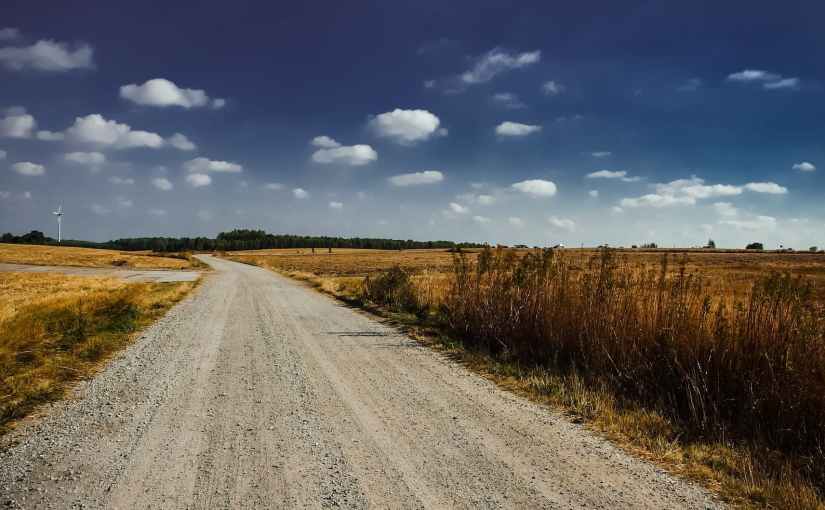
There is no option but to travel this road. Maybe it was not constructed by us, but since we are on it, we need to find those small treasures that will help us to survive it. To survive not just physically, but also spiritually. So that when we reach the end of our journey, all that transpired on this road would have been worth it. For, by then we would have realised that we were not defeated but crafted, transformed into the person we were meant to be. We will come to realise that we really never needed a milepost because God had placed the right people along the way to ensure safe passage.

You Reap What You Sow

Sounds ominous, doesn’t it? It does not have to be. We really need to hear this – be reminded of this -when we are too distracted sowing all kinds of seeds, the good, bad and ugly. Well some of us, never seem to sow bad seeds and this is such a breath of fresh air. Some never sow the seed they intended which could have been avoided with a little self-assessment from time to time.

What we can do to reap a good harvest is to avoid becoming complacent. Though we hear this often, many of us do become complacent and the result of complacency is like walking through sargasso to get to where you are going. By inaction, many create longer roads with harsher conditions to get to their destination. What may help is to act with intention in even minor tasks. As a result, it remains for us to be vigilant so we can confidently reap the best things we can reap.

Also, know that your thoughts matter, Some may even say they matter more than our actions. What you decide to implant in your mind will determine your yield. If the messages are always negative, with nothing leading to your upliftment, the result will always be negative. To avoid always living in fear means to remove things, thoughts and ideas that are based on fear. Be positive in your outlook and be thankful instead of complaining and worrying. These could include what we see in the news, choose to speak about with our friends and even what we think. All need these need to be regulated. Trust me, it is so easy to be swept along but we can stand no matter what the situation to yield a good crop.

Finally, we must remain confident. What we sow we do indeed reap and so this can be an encouragement. It encourages us to sow good thoughts, actions and words. Those that uplift our lives and the lives of those we meet. So, before you sow think of what you will reap and make sure it will fragrant your life and the lives of others.

Dis ease

Dis ease

Discomfort
disagrees,
causes dismay
and distrust
causing dislike.

Dis ease
disconnects
disgracefully,
dismisses
disintoxication
disrespectfully.
makes you its slave.

Dis ease in the body
will make you sorry
if with it you tarry too long
and make it feel like it belongs.