
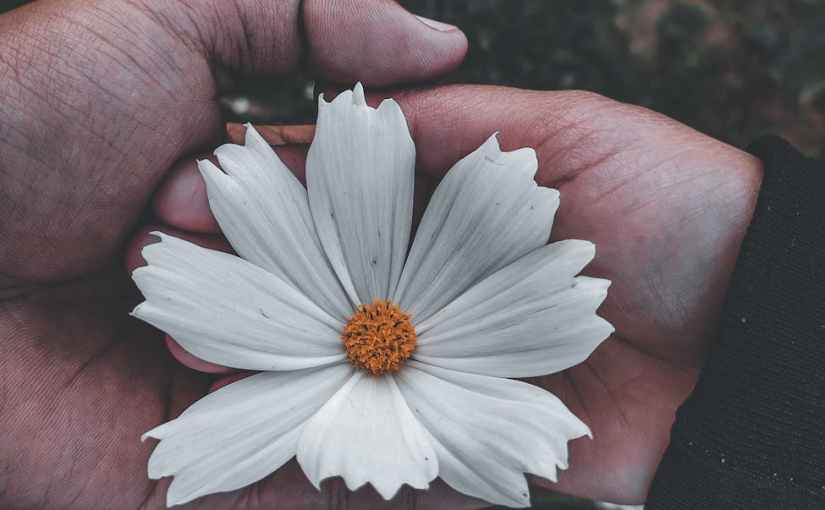
When I grow up...

I'll be an astronaut
travel the galaxies
explore all outerspaces -
I'll be a firefighter
be a hero
save lives -
I'll be a doctor
get rich
make everyone proud -
I'll write my story
happy ever after
where all monsters die -
I'll be a superstar
loved by all
have diamonds and pearls -
I'll be the greatest
powers beyond belief
no one can stop me -
I'll be unstopable
untoucable
unchangeble...

But at 2 scores plus 2,
when will I grow up?
Tag: Life

Words Matter… Context is Everything.
Following up on my article yesterday about being referred to as being “nice” or “too nice”, I had exchanges with two people on the word nice and how it can be viewed and what it says about the person being described in such a way. I would like to put both responses and then give my own as well.
Response 1: I agree with this wholeheartedly. “Nice” often feels like a shallow label — something people use to box you into compliance, to make you more palatable, or to take advantage of you without acknowledging your depth. It’s a performance that benefits others more than it does you, and it comes at a real cost to your mental, emotional and even physical well-being. Kindness, on the other hand, is a deliberate act. It comes from strength, not obligation. It doesn’t require self-erasure or perfection but instead demands authenticity and discernment. Being kind means honouring yourself first, setting boundaries and then choosing to extend care when it’s genuine. That’s real goodness. You’re right, Moonshine, nice gets you drained, but kind keeps you whole, and there’s nothing wrong with disappointing people if it means you finally stop disappointing yourself.
Response 2: “Nice” is an adjective that describes something as pleasant, agreeable, or satisfactory, but it can also mean kind, friendly, or polite in reference to a person’s behaviour. I think nice is a word that has evolved over time. When you see the definition of nice in the quote, then you may start to feel happier about the word. The bible doesn’t use the word nice, it is true, but the language of the day may have needed more emphasis. I sense your hurt deeply. Try and reframe the word nice to the above definition when remembering, I’m not sure if that will help…
According to Google, the word nice originally meant “ignorant” or “foolish,” derived from the Latin nescius, meaning “not knowing”. Over centuries, it evolved through French and English into a broad range of meanings, including “fussy,” “delicate,” “strange,” “shy,” and “dissolute”. The modern meaning of “pleasant” or “agreeable” emerged in the mid-18th century and is the sense that has become most common today. It is fascinating that although the modern interpretation and meaning are positive, I still felt the negative connotation of nice as a label when it was spoken to me. Nice, based on my readings, can be a dismissive (back-handed)compliment, meaning that someone is viewed as overly accommodating to gain approval. Added to this is the idea that someone who is overly accommodating prioritises the needs, desires, and comfort of others to such an extreme that their own needs, well-being, and sense of self are consistently neglected, often leading to burnout, resentment, and being taken advantage of. So, being called nice is for me an insult because of the situations and conversations in which the word was said. Nice, on its own, can be taken at face value as something good, but even the person using it may not be consciously aware of it. When I look at my life, it has been chapters written by an overly accommodating person who has made too many decisions that were not based on my skills, talents or interests but out of the need for approval by society or people I come in contact with and establish some type of relationship. So I do not want to be nice. I want to evolve.
I want to evolve to just being kind. Now again, according to Google, “kind” has two primary meanings: a type or sort of something, and having a friendly, sympathetic, or benevolent nature. Both meanings stem from the Old English word gecynd, meaning “natural disposition” or “nature,” which itself comes from the Proto-Germanic root kundi-, related to kunjam (“family”) and ultimately the Proto-Indo-European root gene-, meaning “to give birth”. This root suggests an original sense of inherent nature, class, or generation, which evolved into both the concept of a “kind” or category and the sense of natural, positive feelings associated with one’s family, leading to “kindness”. Being kind is all about authenticity. From the definition and explanation above, I want to take the term “natural disposition” and, from that, look at its synonym “innate”. Innate means something that exists in a person or thing from birth, is an essential part of its nature, or is a natural, inherent quality rather than something learned or acquired through experience. Being nice is authenticity that does not require compensation or overcompensation. In the bible, the word nice is never used, but the word kind can be found in several scriptures:
Galatians 5:22-23 -“But the fruit of the Spirit is love, joy, peace, forbearance, kindness, goodness, faithfulness, gentleness and self-control.
Ephesians 4:32 -“Be kind and compassionate to one another, forgiving each other, just as in Christ God forgave you”.
1 Corinthians 13:4- “Love is patient, love is kind”
Proverbs 12:25: “Anxiety weighs down the heart, but a kind word cheers it up”.
2 Samuel 9:7: “And David said to him, ‘Do not fear, for I will show you kindness for the sake of your father Jonathan, and I will restore to you all the land of Saul your father, and you shall eat at my table always. ‘”.
The bible is saturated with examples of Jesus engaging people with truth, challenging their behaviour, thoughts and intentions. Being kind means showing love, being compassionate, forgiving and upholding truth. It means uplifting others, reflecting the love of Christ. Being kind means having the courage to say no, even if it causes discomfort, speaking the truth, even if no one agrees or supports your action. Being kind takes strength, and it takes courage. One of the most vivid depictions of this is the incident where Jesus went into the temple and overturned all the commercial tables, saying, “Get these out of here! Stop turning my Father’s house into a market!”. It was not done to please those people but to save their souls, to save worshippers from exploitation. He was not nice, but he was kind. His motive was to save them and make them aware of their danger in carrying out such activities in the house of the Lord. In that situation, he did not focus on being agreeable or avoiding disturbances; he was not seeking followers and so was not concerned about projecting an image palatable to those he chastised. Further, he did not avoid the truth of the situation by remaining silent, nor did he do it expecting to receive applause. He was not trying to be nice, but he acted out of kindness even if the people at that time did not recognise it as such.
So when I consider all these, I have to say there is a value in being kind and not nice that I want to achieve. I do not want to be nice because nice has kept me silent, rooted and furled tight like a flower that is still waiting to bloom. The bible holds truths and lessons that cannot be negated, and one such truth is the importance and value of being kind. It’s nice to be nice, but it’s much more powerful and freeing to be kind.
“My life got better when I realised I didn’t have to be nice. Nice got me run over, stressed out, & disrespected. I’m not nice. I’m a good person.” (unknown)

The Politics of Being Nice
I’m not sure, but I have always felt uncomfortable when people describe me as ‘nice’. Along with the seeming dismissive nature of the label has been this kind of sympathy, which was not encouraging but felt condescending. There was another word they wanted to use, but they were being nice to me. I carried this discomfort until it became a burden. I wanted to shout, “I am not nice, I am trying to be less selfish in my interactions with others!” But I did not do so. Instead, I smiled and pretended that it was the compliment I knew it was not. I did not know why, but I can now unequivocally say, I despise the description “nice”. Because I know it was never a compliment, it was: a form of dismissal, a means of exploitation, silencing and a green light to manipulate. I am not nice.
I realise that being nice can be a social currency, a way to remain in people’s good graces, also known as people pleasing and a way to feel a sense of belonging. However, I am at the age when I no longer want to please, belong or be in anyone’s good graces. I want to ignore you if I do not want to be in your space, to eat what I want, dress how I want, and just be. I am not nice. I have been nice for too long, and the sweet treats I used to receive are like a retriever or bitter, venomously poisonous. I want to retire from the stage, and so I bid, nice, adieu. Instead, I will disappoint everyone and remove the costume. Because being nice is not based on authenticity but requires years of practice – usually in childhood – to perfect a false image, a mask that often slips. Panic attacks, bulimia, anxiety, depression, anorexia and a loss too great to write on this page are all by-products of trying to be nice. So you see, I can no longer be nice. I can no longer lie about things, places and people I do not like or feel uncomfortable with. I can no longer aim for uniformity and conformity. I must bury the dream of perfection, or die.
I want to be kind. I want to be kind to myself by going at my own pace and discovering what it means to be happy and content. I want to make room for myself in my story, and then when I am satisfied, I will build a house and invite a few people over to be my housemates. I spent over 10 years having my energy drained, sucked dry of life by my own mistakes. I will be kind to you based on your intentions and based on your actions. Motivation is critical, and execution is vital. So I will not be nice, but I will decide whether or not I will be kind.
Nice got me used, stressed out and disrespected. I’m not nice. I’m a good person. There’s a difference.” (Unknown).

It Will Be Okay.
Imagine if you lost. Everything you thought you could never live without.
That is a terrifying thought for many of us, but what if we did? What would we do?
It’s easy to look at someone who is not okay and give them advice on what they need to do. Then we think or talk out of their hearing: “Man, that is hard, but thank God it’s not me!”
Now, my issue with such a sentiment is this: does God allow good things to happen to some and bad things to others? Sometimes when we say the above, it seems as if we are somehow exempt from going through certain trials, but we are not.

I spoke recently to a colleague who is undergoing cancer treatment. I had not seen her at work for some time, and then I saw her back out at work. Though she had lost some weight, she seemed so calm and was laughing and smiling, which made me pause and think about how I overreact to some simple things at times. After all she has been through lately, where did she find the courage to get up and live each day as it comes?
As she pointed out to me, it is not easy, but she does it because the alternative is death.
I am realising that the problems I see as insurmountable or really not impossible to overcome. I am in the process of reconstructing my mindset regarding the outlook I have on every situation I face. If I can be devastated at the thought of someone else’s diagnosis and surprised by her ability to get up every day and smile and be pleasant, then maybe I need to change how I view my own problems. Are they really that serious or require the reaction I sometimes have?
Would I be okay if I lost all the things I fear losing, that have nothing to do with the life I have been given by God?
I remember a point, as I got older, that I feared losing my grandmother, and so I used to pray every year that she would live one more year and that God would make it ten or twenty years-or forever if he could. It has been 15 years since my grandmother died, and I still have not forgotten how important she was in my life. Since then, I have made some terrible decisions and some good ones, but the most important thing is that I have been able to continue to live.
An article I recently read, entitled, In Haiti, the Art of Resilience, comes to mind. The article was written in 2010 by Bill Brubaker, after the earthquake which devastated the country and killed 230,000 and displaced approximately 1.5 million others. The writer highlighted a series of stories concerning the impact of the earthquake on the Art community. One that stood out to me was about 87-year-old Haitian artist Préfète Duffaut, who lost family members, friends, his home, and most of his artwork. What was so inspiring about his interview was the hope that Brubaker noted was “shining from his eyes”. The hope is to build from the rubble something new and vital. There were other stories of gallery owners, whose galleries had not escaped the devastation, who provided money and art supplies to artists who had lost everything. Duffaut, at 87, having experienced crisis after crisis in Haiti, along with his countrymen and women, was able to affirm this particular event: “My future paintings will be inspired by this tragedy”. How many of us would be able to create something meaningful and inspiring from the rubble of our own tragedies?
We all have the potential to take ourselves out of the dark abyss that life places us in. All we need to cultivate is a vision of possibilities in the face of adversities.
Though it may be hard for us to keep the faith when things go wrong fast, it will be okay. Just keep telling yourself this until you believe it.
Like many Haitians, let us adopt their attitude when faced with difficulties: ‘Let’s get on with it! Tomorrow is another day.’

Breaking Up With Maladaptive Daydreaming…
I spent so much time with you, and now I have to walk away—just like that, just today. The unicorns were great, and as I look back, my heart flips and screams a silent scream, ” I do not want to become a pillar of salt”. I regret looking back; I see the Milky Way and the rainbow – brilliant and true – beckon to me. Suddenly, a hommack emerges to welcome me back to Unreal. Fear claws with delay talons, vicious and true. “What is there to look forward to?”
I am numb, struck dumb by the reality that beckons menacingly. Now, I want to remain. I could stay forever and walk the yellow brick road. Maybe then I could find Freedom, which has been running from me. I never caught it, but it would just be out of reach, encouraging me to chase it and capture it with my net of great expectations. I never did catch it; most times, I could not see it, only hear the roaring of rushing waters, melodious and true floating through the air.
I have avoided those shadowy figures that lure me back into the trap of daily living. My bones grow cold when I feel them growing too close. “Does it make sense to go back? To sit and watch as my fate is reflected in hopeless eyes and zombies of broken dreams. But I want to walk through the path with real flowers, sunshine daffodils, a real path with dirt that fills my lungs before I give it life once more. I want to experience the newness of changes that signal I am still alive and more is just around the corner. “Not all those who wander are lost,” not forever.
As I step away from those dreams, they become cold and hostile, beating at my back. Without looking back, I know they are fading away into mediocrity and into obscurity. A tear hurries down my face, trying to seal the scream building up, ready to overflowing. Those shadows become solid. They become too real. I see the merging of monsters into faces I know and those yet to come…
“It’s a dangerous business, Frodo, going out your door. You step onto the road, and if you don’t keep your feet, there’s no knowing where you might be swept off to”
Can I make it in the real?

Daydreaming Away Reality
People tell you that when you get older you need to live in the “Real World”. You need to live in REALITY. What if you cannot cope in the real world? what then? Many of us turn to daydreaming and away from living in the harsh light of the NOW because we need an escape. For a moment or some moments, we can envision everything we lack in the reality that is our lives. We can say what we always wanted to say to the people who seem too large and too terrifying in our lives. In the reality of our dreams, we can vanquish our enemies, solve our problems, conquering fears too frightening to give voice to. We can be clean when we have become corrupted by mistakes, ill-advised actions or wayward thoughts. It is a comforting place. Until you are dragged back to everything you vanquished in your mind. you have to, you need to, you must. Anxiety-inducing thoughts that seem to follow you until you lock it out with the door of your imagination.
But those menacing enemies, worries and fears linger in the woods of reality waiting to pounce when you emerge from your castle of dreams. So you find yourself staying more often in your castle refusing to be confronted by these monsters in the woods. Then, you are not satisfied with leaving and returning but feel the need to stay and build the castle wall higher and higher until reality does not exist only your dreams…Is real life worth coming back to?
There are many articles on how maladaptive daydreaming is dangerous yet many still and will part take. The thing is, many people will daydream but not everyone will be negatively affected by the act of daydreaming. Immersive daydreaming has been recognised as harmless once it does not interfere with our day-to-day lives. We all need a little escape from our present circumstances from time to time, but do we want to live more in the real world or be enchanted by our dreams? Where are you right now in 2025? Has your daydreaming gone over the edge to maladaptive or are you able to pull back leave your castle face those monsters and win?

Perfect Peace
It's always the quiet ones
tranquil
serene
floating
through the astro turf
stepping on weeds.
They seem
complete
level headed
dependable
until they jump out a tree
or drown in the sea.
 ramblrWrites.com